
You can nail the keyword and still lose the ranking. Happens more than people think. Usually the reason is search intent in seo — you wrote for the right word, just not for what the person actually wanted when they typed it. Get intent wrong and even well-researched, well-written content quietly underperforms.
Here’s what search intent actually means, the main types you’ll run into, real examples of each, and how to line up your content so it does what people came for.
So What Exactly Is Search Intent?
Put simply, search intent in seo is the reason behind a search — what the person is actually trying to do when they type a query into Google. Not the words themselves, the goal underneath them. Two people can search almost identical phrases and want completely different things. Google’s entire job, at the end of the day, is matching results to that underlying goal, not just the words used.
Content that ignores this can be accurate, well-written, and still fail to rank — because it’s answering a question nobody was actually asking.
The Main Types of Search Intent
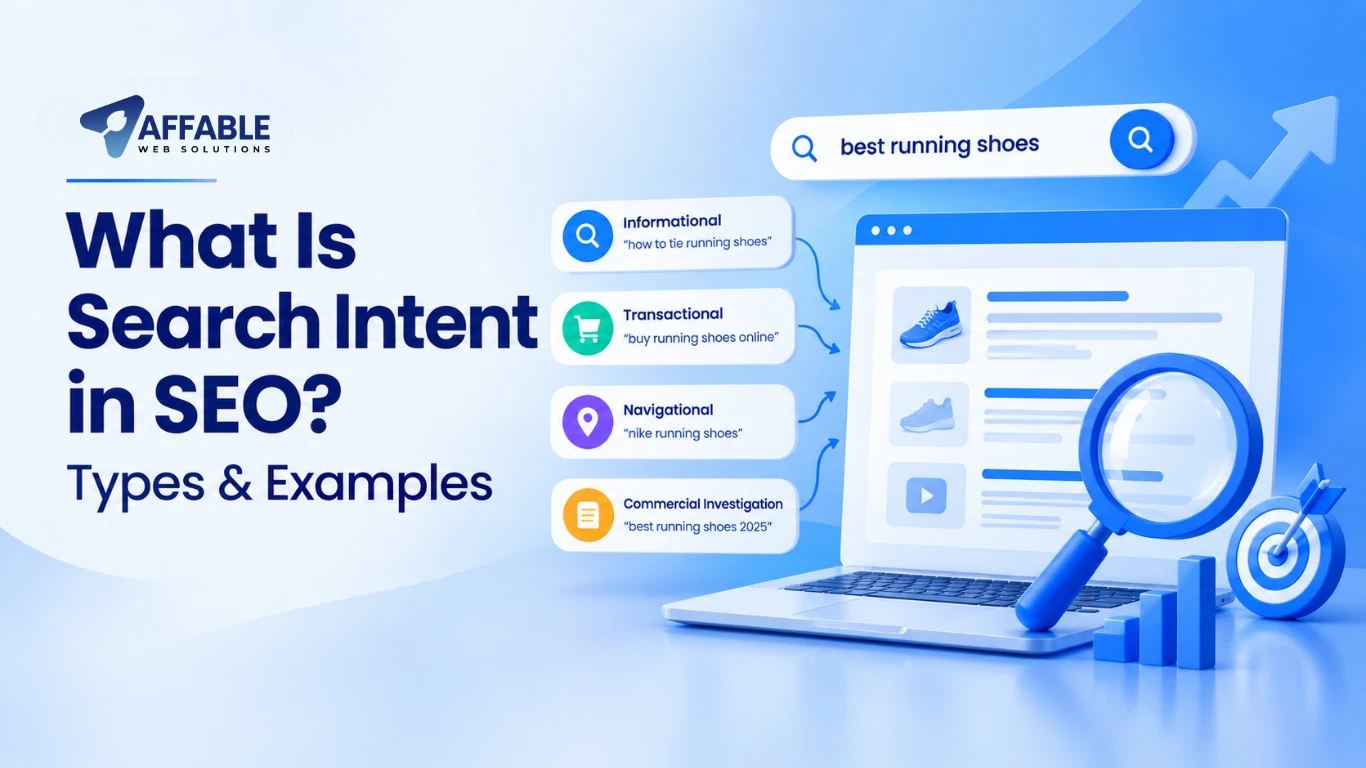
There are four types of search intent that most searches fall into. Once you can spot them, a lot of content strategy gets a lot easier.
Informational intent
The person wants to learn something. “What is search intent in SEO” is a good example — nobody typing that is ready to buy anything, they just want an answer.
Navigational intent
The person already knows where they want to go and is using Google to get there. Something like “Affable Solution blog” or “Gmail login” falls here — they want a specific site, not options.
Commercial investigation
The person is comparing options before deciding. Searches like “best SEO agency in Gurgaon” or “Ahrefs vs SEMrush” sit in this bucket — close to a decision, not there yet.
Transactional intent
The person is ready to act — buy, sign up, book, download. “Buy running shoes online” or “hire an SEO consultant” are classic examples. This is where conversions actually happen
Why Matching Intent Actually Matters
- Google ranks pages that satisfy intent, not just pages that mention the keyword.
- Content that matches intent keeps people on the page longer, which itself is a signal Google notices.
- Mismatched intent tanks conversions even when traffic looks fine on paper.
- It saves you from writing content nobody was actually looking for in the first place.
Keep it broad. Run a bakery? “Birthday cakes” or “eggless cakes” is a fine starting point.
How to Do Search Intent Optimization
Once you know the type, search intent optimization is mostly about shaping the page to match it, rather than just sprinkling in the keyword.
Check the current search results first
Before writing anything, look at what’s already ranking. If it’s all list-style comparison posts and you’re planning a product page, that’s a mismatch worth catching early.
Match the format, not just the topic
Informational searches usually want guides or explainers. Transactional ones want a clear path to buy — not a 2,000-word essay standing in the way.
Use the right call to action for the stage
Someone still researching doesn’t want a hard sell. Someone ready to buy doesn’t want another comparison chart. Match the ask to where they actually are.
Revisit older content with fresh eyes
Search behaviour shifts. A page that matched intent well two years ago might not anymore — worth checking periodically, not just once.
Conclusion
At the end of the day, search intent in seo is less about chasing keywords and more about understanding what people actually want when they search them. Learn the types of search intent, build search intent optimization into how you plan content, not as an afterthought, and both your rankings and conversions tend to follow — because you’re finally giving people what they came for.
For more practical SEO breakdowns, check out the Affable Solution blog, or get in touch if you’d like help auditing your content against search intent.
FAQs: Search Intent in SEO
What are the four types of search intent?
Informational, navigational, commercial investigation, and transactional — each reflecting a different stage of what the searcher wants.
How do I find the search intent behind a keyword?
Look at what’s currently ranking for it. The format and tone of top results usually reveal the intent Google has already matched.
Can one page target more than one search intent?
It’s possible but risky — trying to serve two intents at once often satisfies neither one fully.
Does search intent affect conversions?
Directly, yes. A page that matches intent gives visitors exactly what they came for, which naturally improves conversion rates.
How often should I check search intent for existing content?
Every few months is reasonable, especially for competitive keywords where search results can shift over time.
Related reading: keyword research, how Google ranking works.
Related Articles
Written by
Rinkee Pundhir
SEO Expert & Digital Marketer
Rinkee Pundhir is an SEO Expert and Digital Marketer with 3.5 years of experience in search engine optimization and website management. Her work covers technical SEO, on-page and off-page SEO, keyword research, indexing, and website performance analysis. She works with WordPress websites and uses tools such as Google Search Console to monitor indexing, identify technical issues, and understand website performance in search results. She has contributed to SEO activities for more than 20 client projects across different industries. Her focus is on practical SEO improvements that help websites strengthen their search presence and reach the right audience.
23 articles published


